

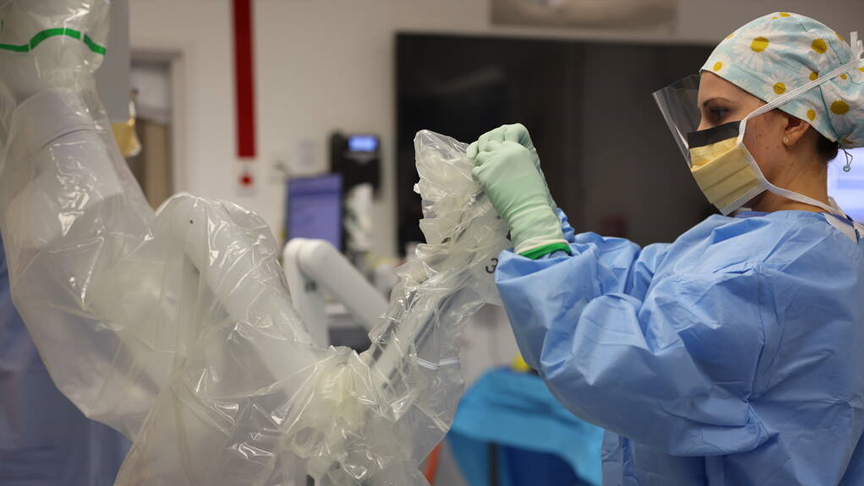
A high-tech surgical robot, which has helped 100 Sunshine Coast Health patients get home and back on their feet faster, is now being used in more types of procedures.
The Da Vinci robot joined the surgical team at Sunshine Coast University Hospital a year ago and has mostly been used for urological surgeries, with patients reporting reduced pain and quick recoveries.
The surgical team is now expanding the robotics program to include general surgery and gynaecology.
SCUH General Surgeon Dr Josefin Petersson explained the key benefits of robotic-assisted surgery are reduced pain, less blood loss and significantly faster recovery than open or laparoscopic procedures.
“It optimises your precision in your surgery,” Dr Josefin Petersson said.
“I get a 3D view that is really up close and I’m able to move and do really precision surgery in places I wouldn’t be able to do previously, that have been too hard to get to from a keyhole, laparoscopic point of view,” she said.
For patients, this means less time in hospital and getting back to their lives faster.
“For patients undergoing urology surgery, robotics has cut down their hospital stay from five nights to one night, while also helping them return to normal activities up to two months faster,” Robotic Surgery Clinical Nurse Consultant Phil Hall said.
For hysterectomy patients, it reduces a ten-day hospital stay to just one night, while significantly reducing the amount of scarring.
“This is going to significantly change our patient’s surgical experience here at SCUH,” Phil said.
During robotic-assisted surgery, the surgeon sits at a nearby console and controls the robot’s instruments with their hands and feet while viewing a crystal-clear, magnified 3D image of the surgical site.
“It’s a great tool to use when you’re performing difficult surgery in narrow smaller spaces, where there’s not much room – it enhances your view and you can do amazing things,” Dr Petersson said.
Kerri’s story
Kerri Hewitt was one of the first patients to undergo a general surgery procedure under the expanded robotics program.
She was nervous when she first found out she needed surgery, to manage an ongoing health issue.
“I get nervous about getting put under, what it’s going to look like at the other end with recovery," Kerri said.
As her surgery grew closer, she was given the option of robotic-assisted surgery.
“It was explained to me it will be less risk and less operating time, so there would be less likelihood of bleeding and complications of being put under for less time, and the healing process will be much quicker as well – and that’s exactly what I found.”
The four to six week recovery period she originally expected turned into just two weeks.
She was grateful for the speedy recovery and was even able to enjoy the time with her daughters who had travelled interstate to look after her.
“I’m just amazed, like I really expected more pain, more recovery, more time off, and I didn’t expect to have such a turn around, that my body’s working really well.”
“The whole team has been really helpful, thank you to everyone involved, especially the surgeon Dr Josefin Petersson.”