

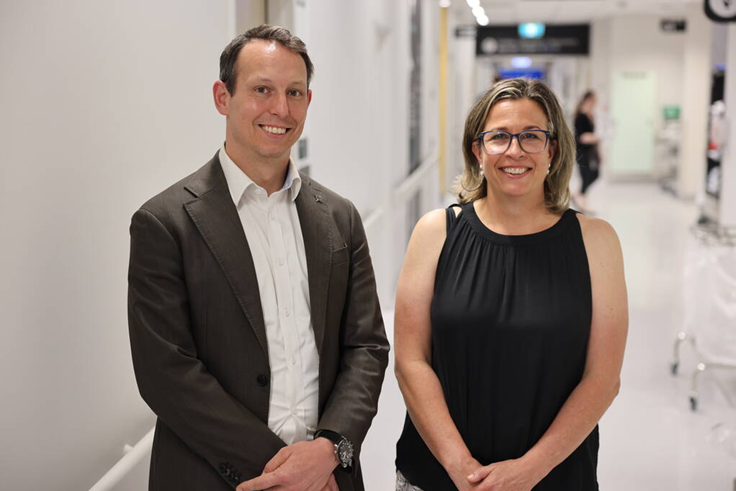
New hope is being offered to people living with motor neurone disease (MND), with Phase 2 of a Queensland-developed clinical trial aimed at halting the disease and restoring lost function set to begin at Sunshine Coast Health. “People living with MND urgently need better treatment options, and this trial represents an important step towards understanding whether we can not only slow the disease, but potentially restore some lost function,” Medical Director of Stroke and Neurology at Sunshine Coast Health Associate Professor Antony Winkel said. The 75-person trial will test an experimental treatment called NUN-004, developed by Brisbane-based biotechnology company NuNerve. The treatment aims to protect the nerve cells that control movement and help repair damaged connections between the brain, spinal cord and muscles. The trial will involve six Australian clinical sites, including the Sunshine Coast, and follows encouraging early results from a smaller study involving people living with MND. Julianne's storySunshine Coast local Julianne McLean was diagnosed with MND in April, but the disease has already completely changed her and her family’s life. “With that shock diagnosis, plans do come to a screeching halt, and not just for me, but for my husband and my two girls as well. They are essentially having to put their lives on hold to support me, and I know they wouldn’t have it any other way. But that’s what I really hate about motor neurone disease, is that it is happening to my family just as much as it is happening to me. Julianne is now adjusting to life with the debilitating disease but says clinical trials like this one give hope to those with MND. “In my opinion, MND research in Australia is world class, and I think that is evidenced by this NuNerve Phase 2 trial. And to have access to this clinical trial so close to home, that’s particularly exciting. “More importantly, the fact that it is potentially going to stabilise degeneration as well as improve function, that’s something that hasn’t been seen before in Australia or worldwide, so that gives new hope. And I think in MND, we need more hope,” she said. NuNerve Chair Emeritus Professor Perry Bartlett AO said the treatment was the result of more than 25 years of research into how nerve cells communicate and repair themselves. The earlier study found the treatment was well tolerated, with some participants showing signs their condition had stabilised. Participants also reported improvements in activities such as walking, balance, grip and strength. The larger Phase 2 trial will help researchers determine whether these early results can be repeated in more people living with MND. NuNerve was established by UQ’s commercialisation company, UniQuest, and the Estate Peter Goodenough Unit Trust to advance more than 25 years of research originating at The University of Queensland and Queensland Brain Institute by Emeritus Professors Perry Bartlett and Andrew Boyd. |